PROSPECTING AND GEOLOGY
Gold in Quartz: What to Look For and What Can Fool You
A white vein through dark rock is a clue to a geological story. It is not a promise of gold. The useful skill is knowing which observations make that clue worth following.
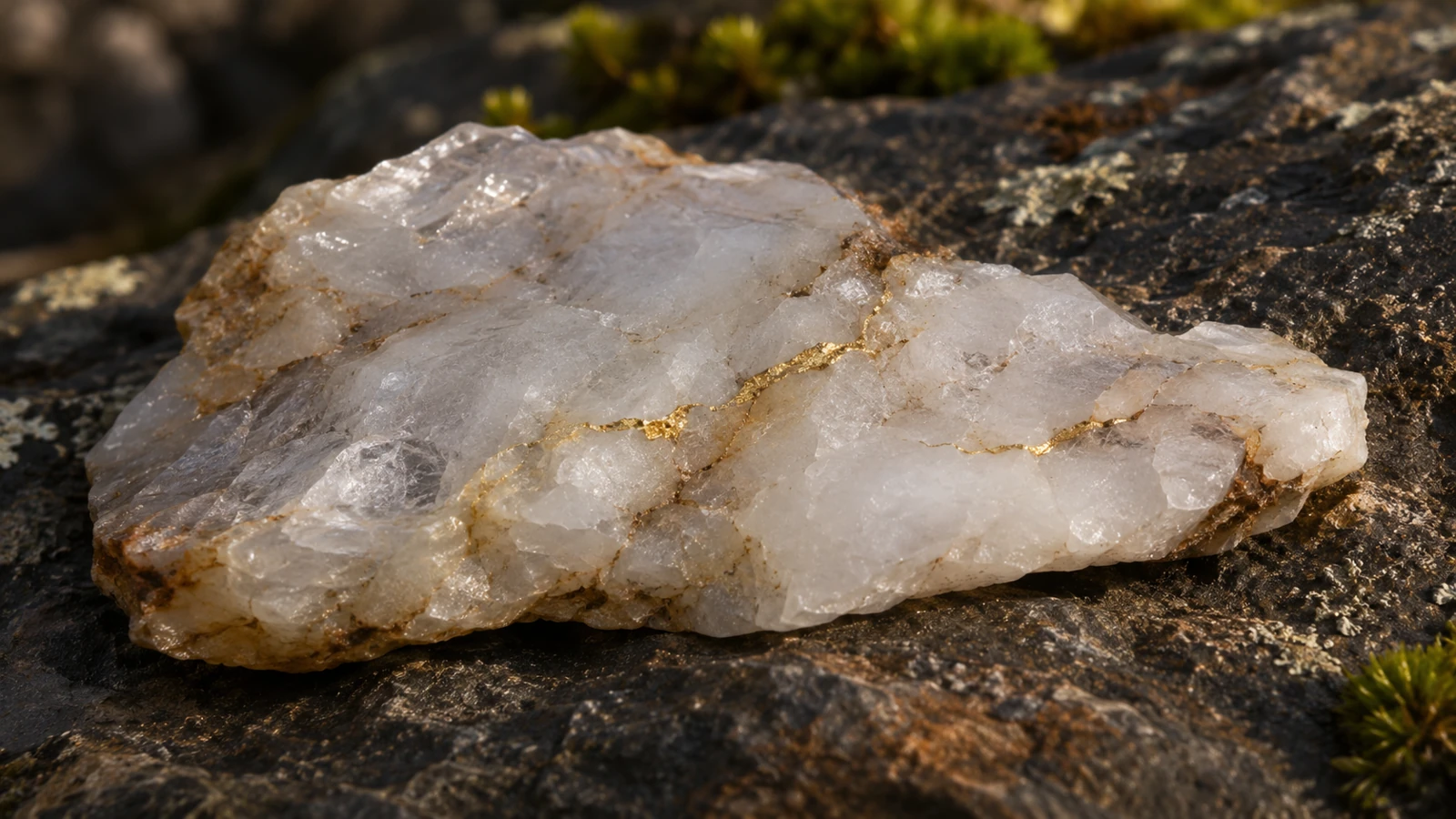
Why quartz and gold can share a vein
Hot fluids moving through fractured rock can leave minerals behind as conditions change. Quartz is one of the conspicuous minerals in many vein systems, while gold may occur with it or with associated minerals. The quartz is a record of mineral-forming activity; its presence alone does not establish an economic gold concentration. [1][2]
That distinction matters in the field. A bright white vein can be much easier to see than a tiny gold particle, so it naturally attracts attention. Treat the visible material as a starting point for understanding the surrounding rocks, rather than as a colour-coded treasure marker.
Gold may occupy the cracks
A USGS study of the Grass Valley district in California found gold along quartz grain boundaries and fractures, and as inclusions in later growth zones of pyrite. It did not find gold enclosed in the quartz itself in the studied material. That is evidence about a particular deposit and its formation sequence, not a rule for every quartz vein worldwide. [2]
For a prospector, it is a reason to examine relationships: which mineral cuts which, where fractures occur, and whether apparently similar pieces came from the same exposed vein. A loose fragment and an intact vein provide different amounts of geological context.
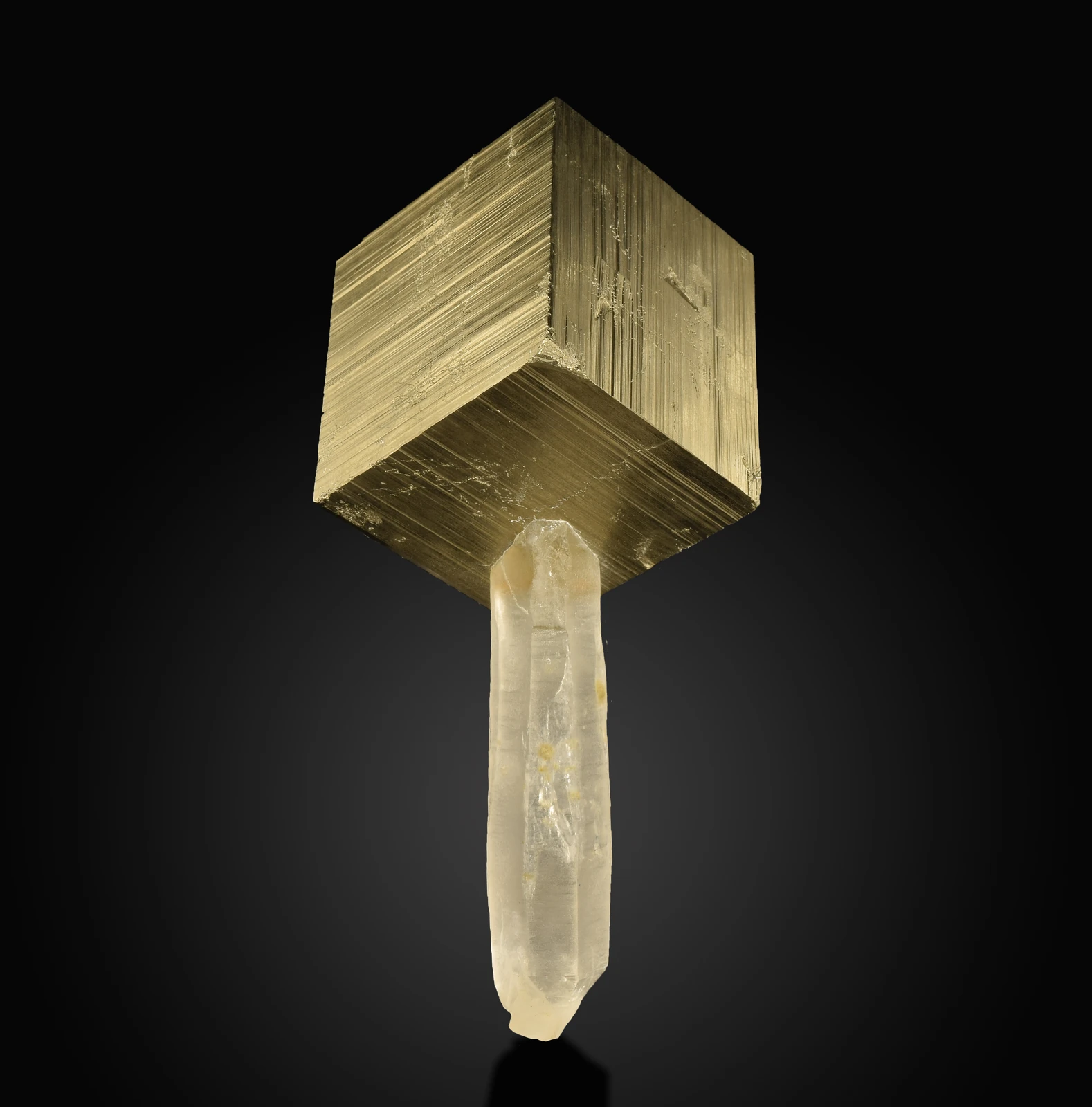
The yellow mineral may be pyrite
Pyrite can occur with quartz too. The genuine USGS specimen pictured here is pyrite and quartz from Washington State; the brass-coloured mineral is not presented as gold. A shiny inclusion therefore needs more than a hopeful glance. [3]
Gold is soft and malleable, while pyrite commonly forms brittle crystals. Those are useful differences, but tiny inclusions, mixed minerals and surface coatings can defeat a casual field identification. A photograph cannot certify a specimen. For a closer comparison, see the gold identification guide.
Record the evidence before interpreting it
Photograph the overall exposure as well as any close detail. Note the host rock, the orientation and width of a visible vein, and whether the piece was loose or in place. Keep observations separate from interpretations: “yellow speck in a fracture” is an observation; “rich reef” is a conclusion that requires much more evidence.
Avoid judging a large area from one attractive hand specimen. A striking piece can be unrepresentative, and the absence of visible gold does not measure the total gold content either. Identification and representative sampling answer different questions.
What the rock cannot tell you by appearance
Visible gold can establish that a particular fragment contains gold once properly identified. It does not by itself tell you the average grade of a vein, the continuity of mineralisation, or whether recovery would be practical. Geoscience Australia describes gold occurring in different settings and particle sizes, which is why one visual test cannot serve every deposit. [1]
The strongest field habit is to preserve the chain of evidence. Start with a careful description, compare it with reliable geology for that locality, and seek qualified mineral identification or analysis when the answer matters. Quartz can point you towards a question. It cannot answer all of it.
Sources and Further Reading
- Geoscience Australia — Gold ↗
- USGS — Quartz Veins and Gold at Grass Valley ↗
- USGS — Pyrite and Quartz ↗
Sources checked 25 November 2026.