Gold and Geology
How Gold Nuggets Form
Follow gold from hot fluids and quartz veins to weathered rock and alluvial deposits, with research into earthquakes and microbial gold cycling.
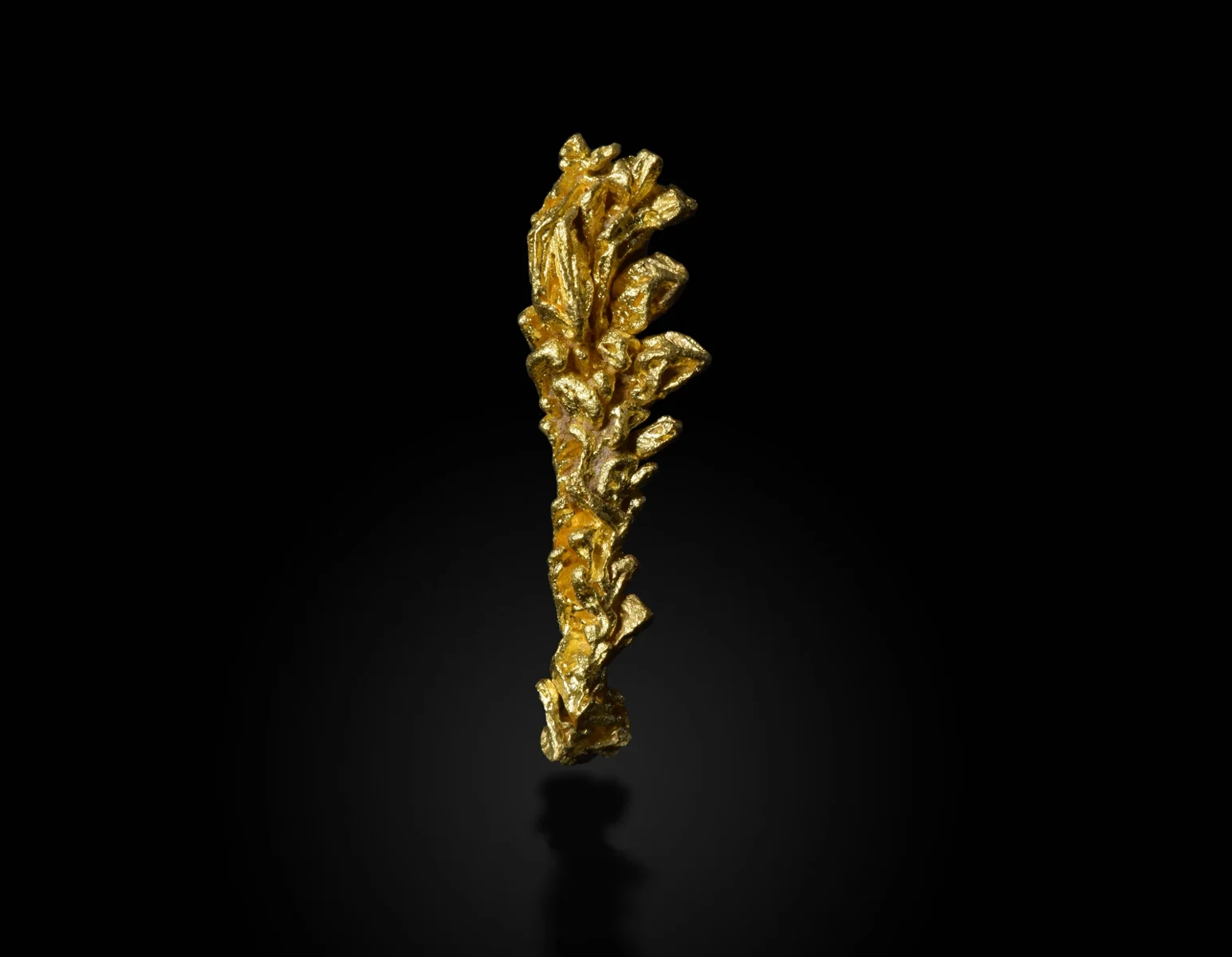
A gold nugget in your hand looks solid and self-contained. Its history is anything but simple. Before it reached a creek bed or a patch of weathered ground, gold had to gather inside rock, survive the rock breaking down and sometimes move again. That journey helps explain why two nuggets can look so different.
Gold First Collects Inside Rock
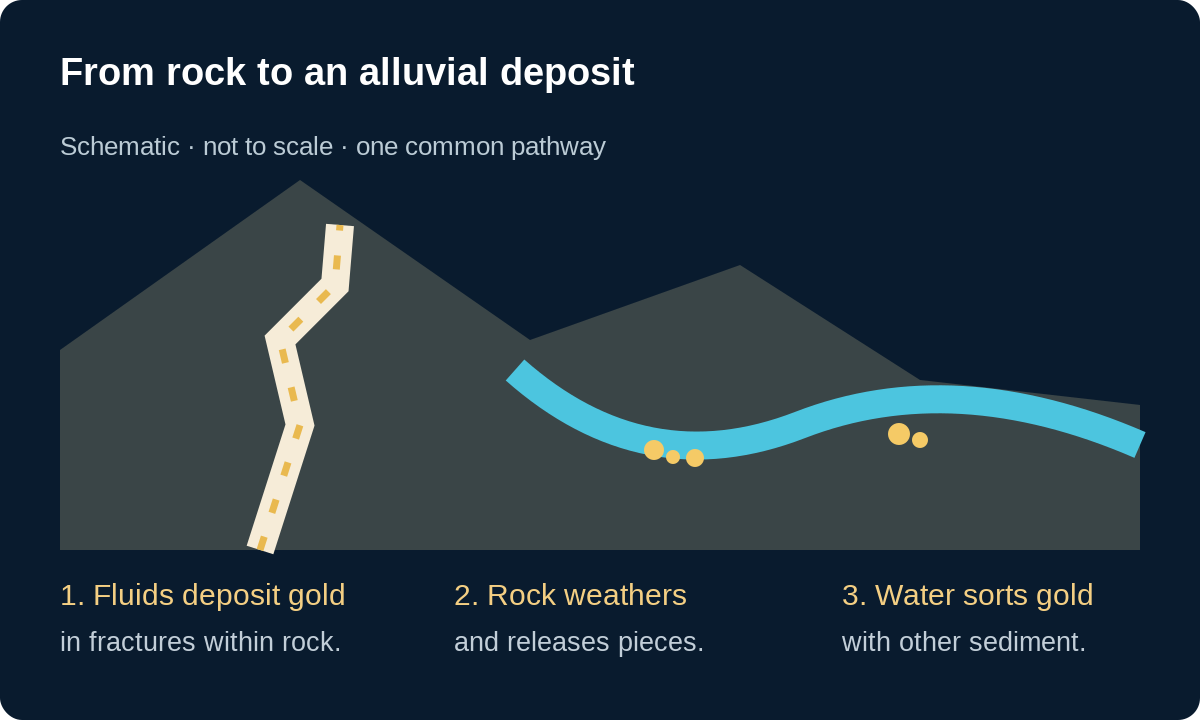
Geoscience Australia describes gold deposits forming when hot fluids carry dissolved gold through fractures underground. Changes in temperature, pressure or chemistry can cause the gold to come out of solution. Quartz commonly forms alongside it, producing the gold-bearing veins familiar from old mining districts.
The gold is not always a visible lump. It can occur as fine particles or within other minerals. A piece of white quartz may contain no gold at all, while valuable gold-bearing rock can look fairly ordinary. Colour alone cannot tell the whole story.
How Does a Large Lump Grow?
One puzzle is how very dilute fluids manage to concentrate gold into large pieces. A 2024 study led by Monash University tested a possible extra mechanism: the electrical response of quartz when it is stressed.
Quartz is piezoelectric. Squeezing or deforming it can produce an electrical potential. In laboratory experiments, researchers applied repeated stress to quartz immersed in gold-bearing fluid. Gold deposited on the quartz, and existing gold particles became favourable sites for further growth.
The researchers proposed that repeated earthquake-related stress could help explain large gold accumulations in some quartz veins. It is a supported experimental mechanism and a geological explanation to investigate, rather than a claim that every nugget formed the same way.
Weathering Releases the Gold
Rock exposed near the surface gradually changes and breaks apart. Water, chemical reactions and physical weathering can release the gold it contains. Some pieces remain close to their source in residual material. Others move downhill into transported deposits.
That distinction is useful when reading a landscape. A concentration near a weathered vein and a concentration in an old stream channel may have different histories, even if both contain native gold. The surrounding geology and sediment matter as much as the nugget itself.
Creeks Sort More Than They Create
Moving water can transport loose gold along with gravel and sand. Because gold is very dense, it behaves differently from much of the lighter material. Where the flow and the shape of the stream bed favour deposition, it can become concentrated in alluvial deposits.
Repeated transport can wear and reshape pieces. But a rounded nugget is not a reliable kilometre counter. Shape also depends on its starting form and the conditions it encountered. One attractive specimen cannot establish exactly where it began.
Can Gold Grow Near the Surface?
There is also a biological part to the story. Researchers working with Australian gold grains have found evidence that microbes can help dissolve, move and re-deposit gold. A University of Queensland research summary describes repeated cycles that can refine and concentrate secondary gold.
Those findings help explain changes to grains in particular environments. They do not mean a large nugget routinely grows from nothing in a few years. The measured surface processes, the original gold deposit and the history of a large nugget are different parts of the problem.
What a Nugget Can Tell You
Attached quartz, surface texture and the material around a find are clues worth recording. Scientists combine those observations with microscopy, chemistry and geological context to understand a specimen’s origin. A photograph on its own leaves many of those clues out.
The fascinating part is the sequence: fluids concentrate gold, rocks change, and landscapes sort what survives. Sometimes microbes and the electrical properties of quartz add another chapter. A nugget is a small object carrying a much larger geological story.
Sources and Further Reading
- Geoscience Australia — Gold
- Monash University — Gold Nugget Formation Research
- Monash University — Earthquake-Generated Electricity and Gold
- University of Queensland — Bacteria and Secondary Gold
Sources checked 15 November 2026. Original educational article by Gold Strike / Strike Labs. Image credits and illustrative material are identified in their captions.