Getting started
Gold prospecting in Australia: where to start
Start with documented fossicking areas, learn with local groups and use AI to organise a practical first trip.
Australia
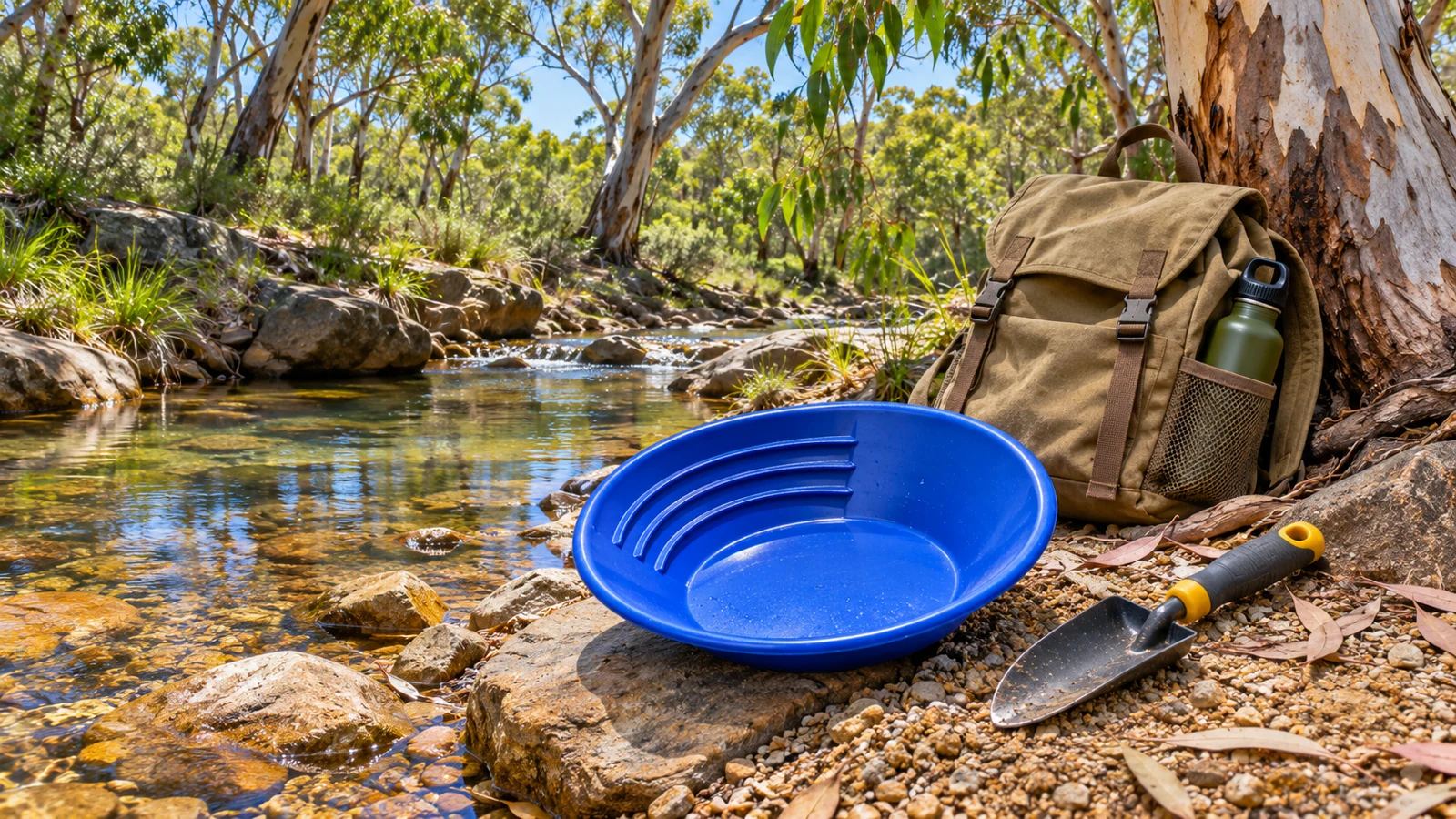
A first gold-prospecting trip is easier when you start somewhere known, documented and suitable for the activity you want to try. You do not need a secret location to begin learning. Choose a manageable outing, ask questions and build confidence with your maps, equipment and surroundings.
1. Start with documented fossicking areas
Begin with officially described fossicking areas or published prospecting-area guides. Look for a clear location, a boundary map, the activity allowed and the current conditions. A well-known goldfield town is a useful research lead, but it does not mean every nearby paddock, creek or patch of bush is open to prospecting.
Useful starting points include Queensland’s documented fossicking areas, Tasmania’s declared fossicking areas and Parks Victoria’s prospecting guides and permitted-area maps. These cover different minerals, methods and conditions; select one that suits your intended activity.
2. Choose an activity and check access
Gold panning and metal detecting call for different equipment and different ground. Before buying a detector or assembling a panning kit, check the exact location, land manager, permissions, equipment rules and closures. Use the current official guidance for the state or territory you will visit.
Our rules and fossicking-area links bring the starting points together. If the boundary or access position is unclear, ask the relevant authority or land manager. Historical workings, an old map or a social-media post do not establish current permission.
3. Join local fossicking groups
Facebook fossicking and gold-prospecting groups can be useful places to ask beginner questions, learn about local conditions, hear about club outings and see how people use their equipment. Search for your state or region together with “fossicking”, “gold prospecting” or “metal detecting”. Read the group rules, introduce yourself and explain what you want to learn.
Ask practical questions: “Which documented beginner area should I research?”, “Is there a club outing I can join?” or “What would you take for a short first trip?” Local clubs and forums offer another route. The PMAV branch directory lists regional contacts in Victoria, while our community links include associations and a hobbyist forum. Confirm access advice against current official sources before travelling.
4. Use AI to help research and plan the trip
AI can help explain unfamiliar terms, compare equipment categories, organise questions, build a packing list or turn your notes into a whole-trip itinerary. Give it useful constraints: your starting town, available days, experience, preferred activity, transport and camping or accommodation preferences.
Ask it to include source links and dates, identify anything that still needs checking, and keep travel times realistic. Open the sources yourself for access rules, closures, weather and booking details. Treat an AI-generated destination or route as a research suggestion until those checks are complete.
5. Research the ground and keep the kit manageable
Compare the area’s geology, historical records, imagery and terrain rather than relying on one promising-looking mark. A printed atlas can provide context; our Doug Stone atlas guide explains how to use one alongside current information.
Make a kit list for the activity and conditions. Include suitable clothing, water, sun protection, navigation and the supplies appropriate to your trip. Read the official safety guidance for your destination before setting out. A short, well-researched visit is a useful first step even if you find no gold.
6. Keep a simple trip record
Save the official pages you checked, the date, your chosen area, route and equipment list. Afterwards, note what worked, what confused you and what you would change. Share useful questions with your group and use AI to organise your notes if that helps. Those observations will guide the next outing better than buying every accessory at once.
Next, learn what each map layer tells you and keep the Links page handy.
Sources & further reading
Sources checked 12 November 2026. Visit the relevant authority for current requirements and conditions.
- Resources Victoria — Recreational prospecting
- Queensland Government — Fossicking licences
- NSW Resources — Fossicking in NSW
- Queensland Government · Official — Fossicking safety
- Parks Victoria — Fossicking and prospecting
- Queensland Government — Where you can fossick
- Mineral Resources Tasmania — Fossicking areas
- PMAV — Regional branches