Practical Prospecting
Sluice Boxes Explained: Water, Riffles and Fine Gold
A sluice can move much more gravel than a pan. The important question is whether the gold stays behind while that gravel moves through.
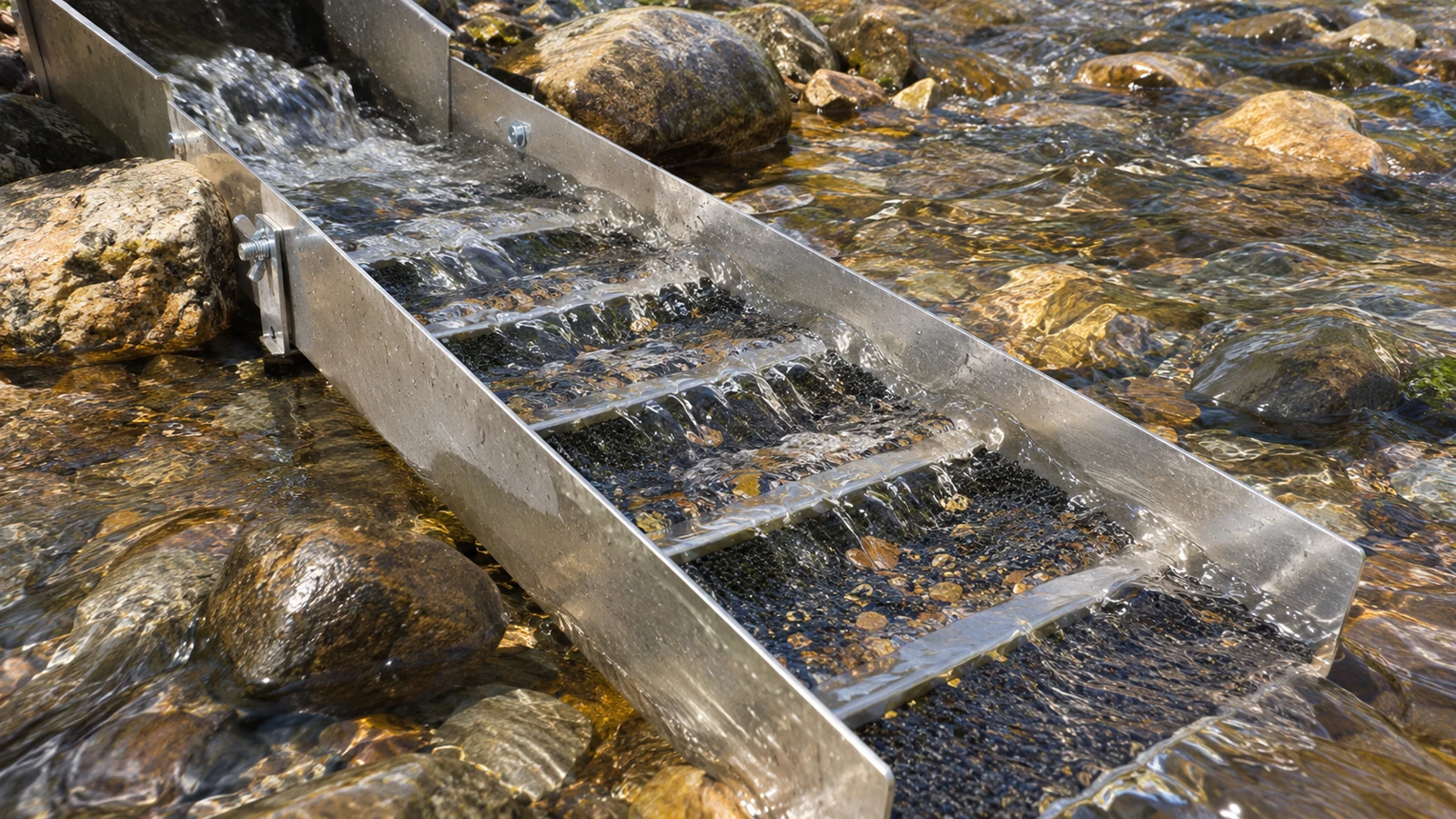
A stream inside a channel
A sluice box is a channel that directs water and gravel across a recovery surface. Riffles and matting create places where dense particles can collect while lighter material moves on. It is a controlled version of the natural concentration that produces some alluvial gold deposits. The box processes material; it does not make an unproductive sample rich. [1][2]
The useful starting point is the material you actually have. A few coarse particles, very flat flakes and extremely fine gold do not behave identically. A setup that catches visible specks can still lose smaller material.
Water must move the gravel without scouring the trap
The flow needs enough energy to clear ordinary gravel from the working surface. Too little movement can leave the recovery area buried. Excessive flow can carry valuable particles through before they settle. Feed rate matters too: dumping in a large load changes the conditions the box was set up to handle. [2]
There is no single angle or flow setting that suits every channel, mat and sediment. Treat the equipment maker’s instructions as a starting point, then make small changes and check the outcome. “More water” and “steeper” are adjustments to investigate, rather than automatic improvements.
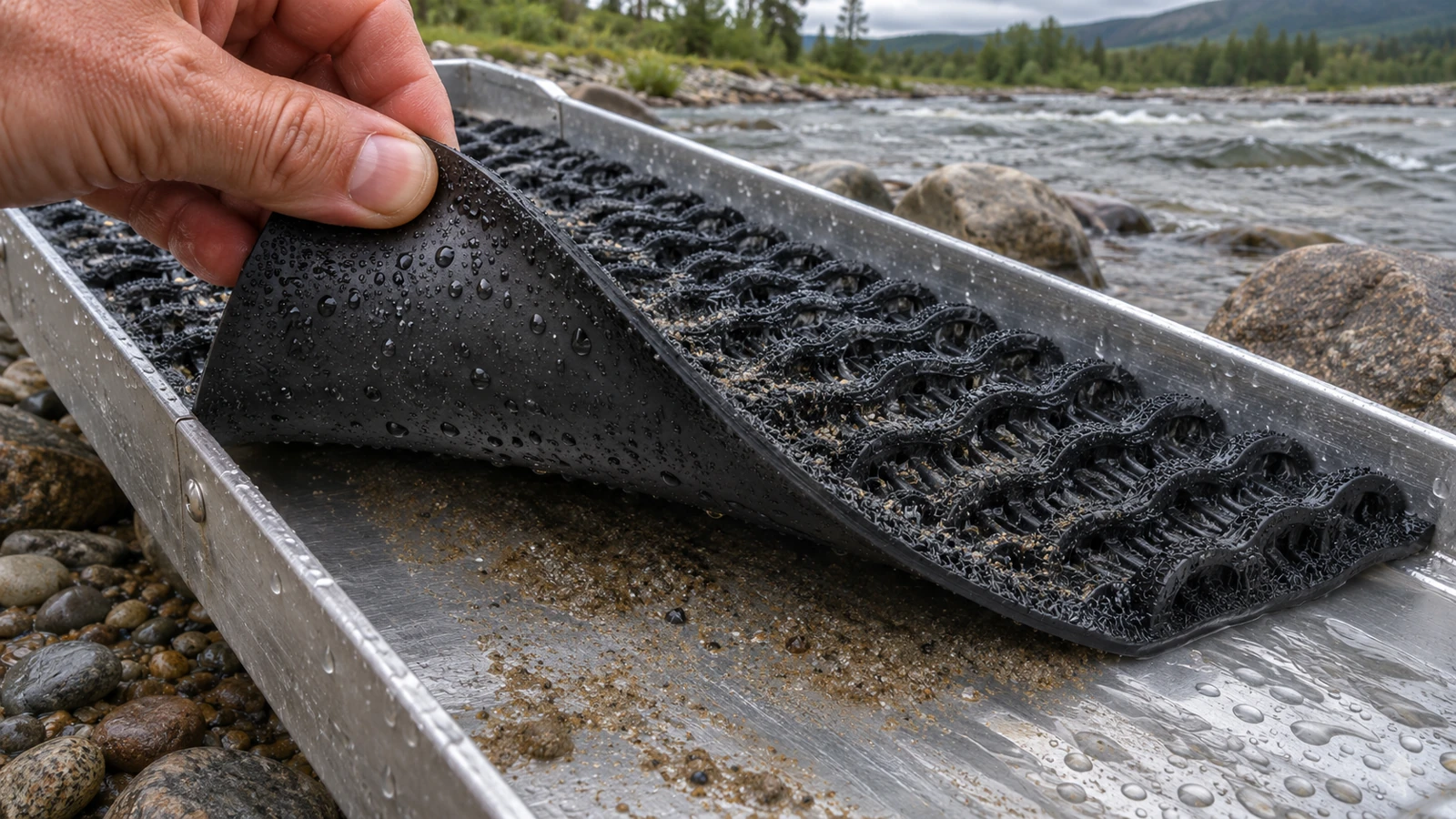
Prepare the feed
A screen can separate oversize material before the finer fraction enters the sluice. Inspect what the screen retains rather than assuming that every large piece is barren. Break up clay-bound material so that particles can separate instead of travelling together inside a lump. The BLM’s recreational panning guide describes checking oversize material and freeing material from clay; those preparation principles also help explain what a recovery system needs from its feed. [1]
A steady small feed is easier to observe than repeated shovel-sized surges. Watch whether the surface clears between additions. If gravel stays piled up, pause and find out why before adding more.
Check the material leaving the box
A practical check is to collect a small sample of the discharged material and pan it carefully. Finding gold there tells you that some has passed through. Failing to find it in one sample does not establish a perfect recovery rate. Keep sample sizes and methods comparable when testing adjustments.
This is a suggested field check, not a calibrated recovery test. A meaningful percentage requires knowing how much gold entered as well as how much was recovered. A photograph of gold in a mat cannot provide that comparison.
Fine gold sets a harder test
USGS describes how gravity separation becomes more difficult for very small gold particles. Particle size joins density as an important part of recovery. That is why a box producing an attractive coarse concentrate may still need careful testing on fine flakes. [2]
Use the pan to learn about the concentrate, keep notes on changes, and compare results before processing a large volume. Check the rules for the actual waterway first: permission to pan does not necessarily permit sluicing, pumping or disturbing banks. Regulations and access requirements belong to the local jurisdiction. [1]
Sources and Further Reading
- BLM / US Forest Service — Recreational Gold Panning on the Kenai Peninsula ↗
- USGS — Gold, Open-File Report 02-303, placer recovery ↗
Sources checked 24 November 2026.