Practical Prospecting
Dryblowing for Gold: Searching Without Water
No creek. No sluice. Just dry earth, moving air and the chance that something heavy stays behind. Dryblowing turns one of the goldfields’ biggest shortages into an engineering challenge.
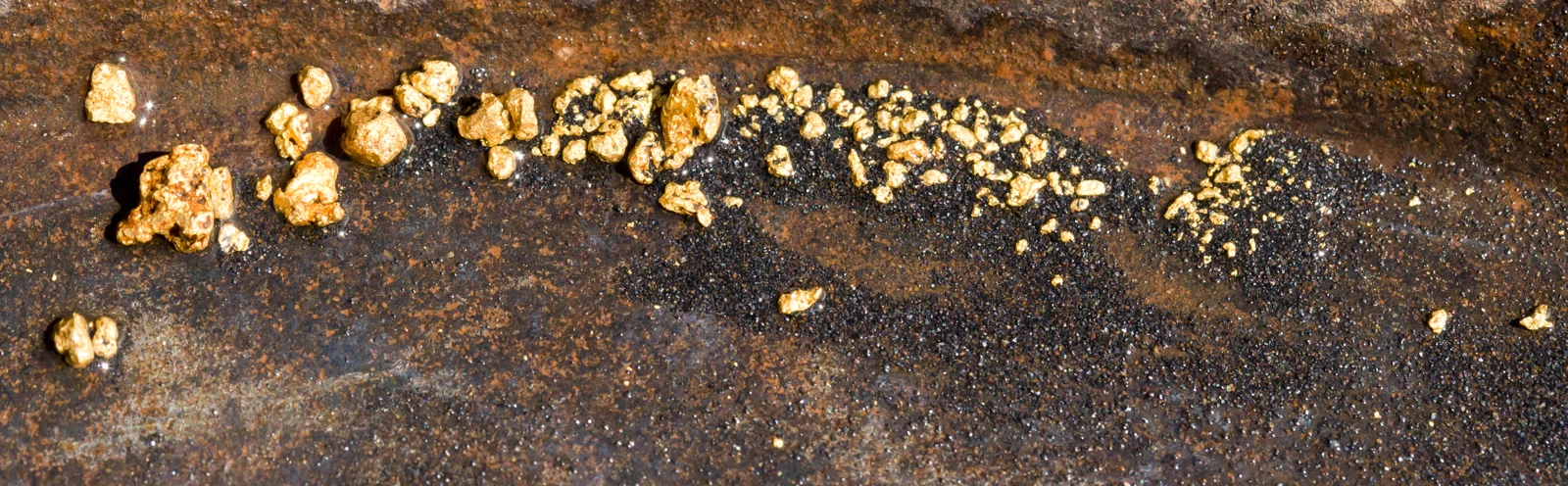
A gold pan needs water to wash lighter material away. In a dry goldfield, that can mean carrying the processing medium along with everything else. Dryblowing approaches the same sorting problem from another direction: use air, movement and gold’s weight to produce a smaller, heavier concentrate.
What Does the Air Actually Do?
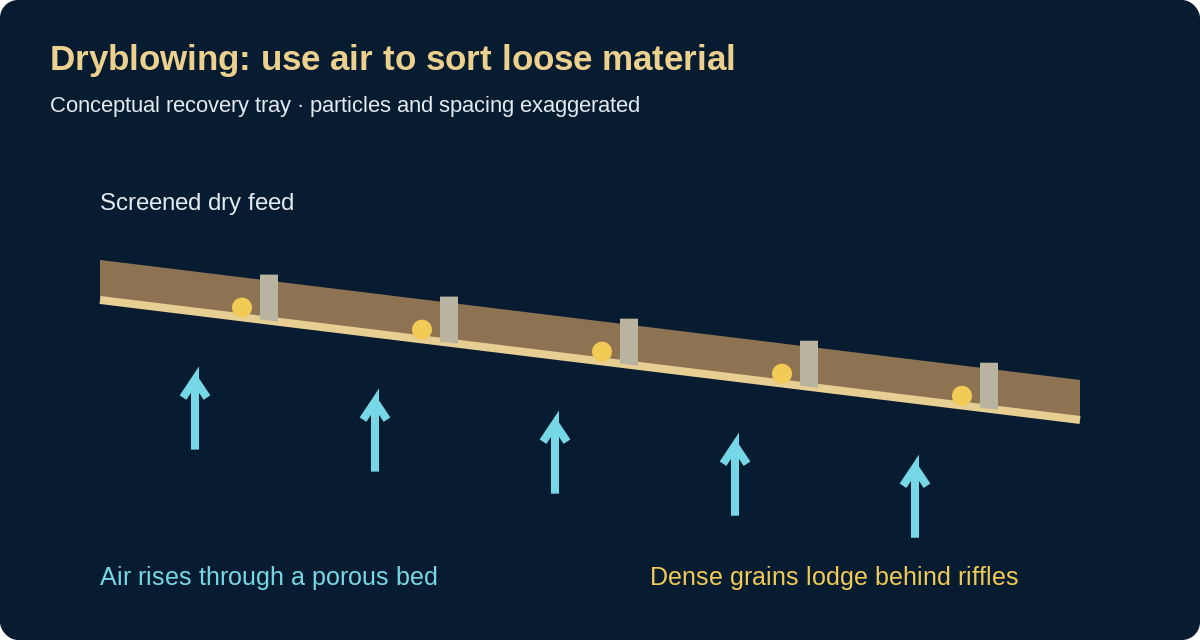
The simplest version is winnowing: dry, broken-up material falls between dishes while the breeze carries lighter particles aside. A dryblower makes the process more controlled. A screen removes coarse stones, then the finer material moves across a permeable recovery bed above bellows. Air pulses lift and shift the lighter waste while dense particles settle into the riffles.[1]
The result is a concentrate, rather than a tray of pure gold. Other heavy minerals can stay behind too. South Australia’s equipment guide describes wet panning as a way to finish the recovery after simple winnowing. “Without water” describes the main separation stage; it need not describe every step of the clean-up.[1]
A Goldfields Invention Born of Thirst
Western Australia’s dry interior demanded different tools from the creek diggings of the eastern colonies. The WA Museum describes homemade shakers that screened crushed material before it was winnowed. Successive designs brought the screening, rocking and airflow into one portable machine.[2]
Steve Lorden invented his Patent Cradle Dryblower in 1893. According to the museum, 300 machines sold in its first year. They were made in Fremantle and could be transported by horse or camel—although a machine weighing about 100 pounds was hardly a pocket accessory. The technology mattered because it let prospectors process material where a flowing creek was absent.[2]
Dry Dirt Is Part of the Machine
The separation works on individual particles. Damp fines that cling together behave differently from loose sand: a clump can carry light waste and a gold grain through the tray as one piece. That is why the condition of the feed matters as much as the presence of a blower.
Keene’s operating instructions emphasise controlling the feed and adjusting the recovery tray for a steady flow. Treat those adjustments as part of a particular machine’s setup, rather than a universal angle or air setting. Changing the material changes the problem the machine is being asked to solve.[3]
A Useful Method, With Limits
Dryblowing is a concentration method. It cannot create gold in barren ground, and seeing dense material in the tray is not the same as confirming gold. A detector and a dryblower also answer different questions: one responds to a target; the other processes a sample of material.
Equipment and Permission Are Separate Questions
Australian rules depend on the state, land and activity. South Australia’s recreational fossicking guidance allows hand-operated equipment and distinguishes power-operated machinery as mining. WA’s Miner’s Right guidance describes limited sampling with handheld equipment; ground disturbance using mechanised equipment can require an approved Programme of Work. A right to enter or detect is not blanket approval to run a powered dryblowing operation.[1][4][5]
Dryblowing’s appeal is easy to understand: the goldfields did not have to stop at the last creek. With a clever change of medium—from water to air—prospectors found another way to ask the ground what it contained.
Sources and Further Reading
- South Australian Department for Energy and Mining — Fossicking equipment ↗
- Western Australian Museum — Getting Gold without Water ↗
- Keene Engineering — Model 140/151 drywasher instructions ↗
- WA Government — Miner’s Right holder rights ↗
- WA Government — Apply for a Programme of Work ↗
Source pages checked 18 November 2026.