Practical Detecting
Detector Sweep Speed: Why Rushing Can Cost You Gold
The coil passes over the right patch, but the useful signal never becomes clear. Before reaching for more sensitivity, look at how you are moving the detector.
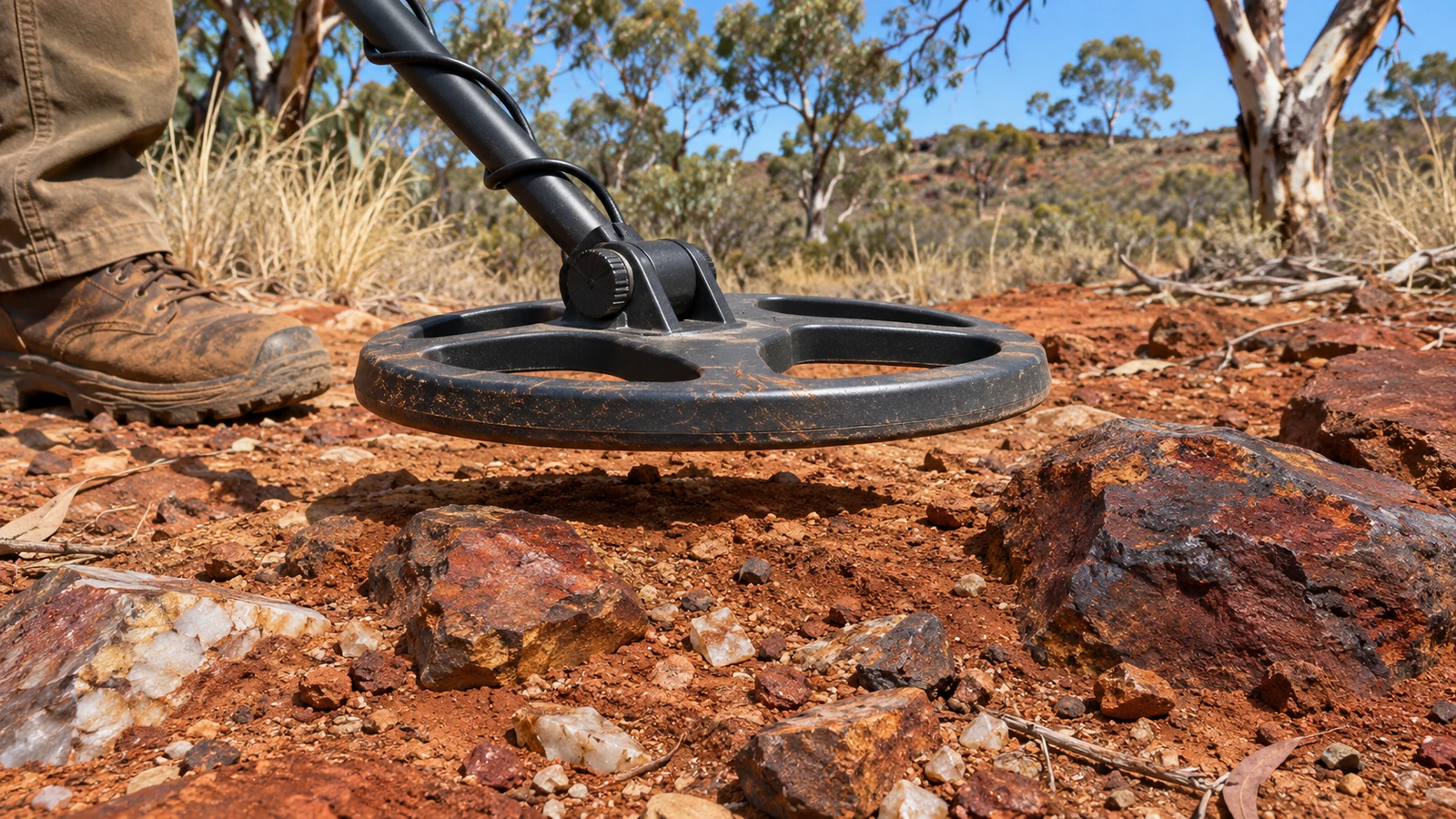
Covering ground is not the same as searching it
A detector needs a usable response from a target against the response from the surrounding soil. Moving the coil faster can change that response, particularly where the ground is mineralised or targets are close together. Minelab's field guidance identifies both sweep speed and coil height as variables worth checking when a signal is difficult to separate from ground noise. [1]
There is no universal walking pace or seconds-per-sweep rule that suits every detector. Its processing, search mode, coil and the ground all matter. Use the technique recommended in your model's manual as the starting point, then compare repeatable signals under the same conditions. [3]
Keep the coil level through the whole pass
A rushed swing often becomes an arc: low in the middle and high at the ends. That changes the distance from the target just when you need a consistent comparison. Try a comfortable sweep with the coil parallel to the ground, adjusting around rocks rather than striking them or letting the coil rise unnecessarily.
Ground balance compensates for mineralised soil; it does not remove the need for careful coil control. Sensitivity and ground settings should support a signal you can interpret, rather than produce so much noise that every pass sounds different. [2]
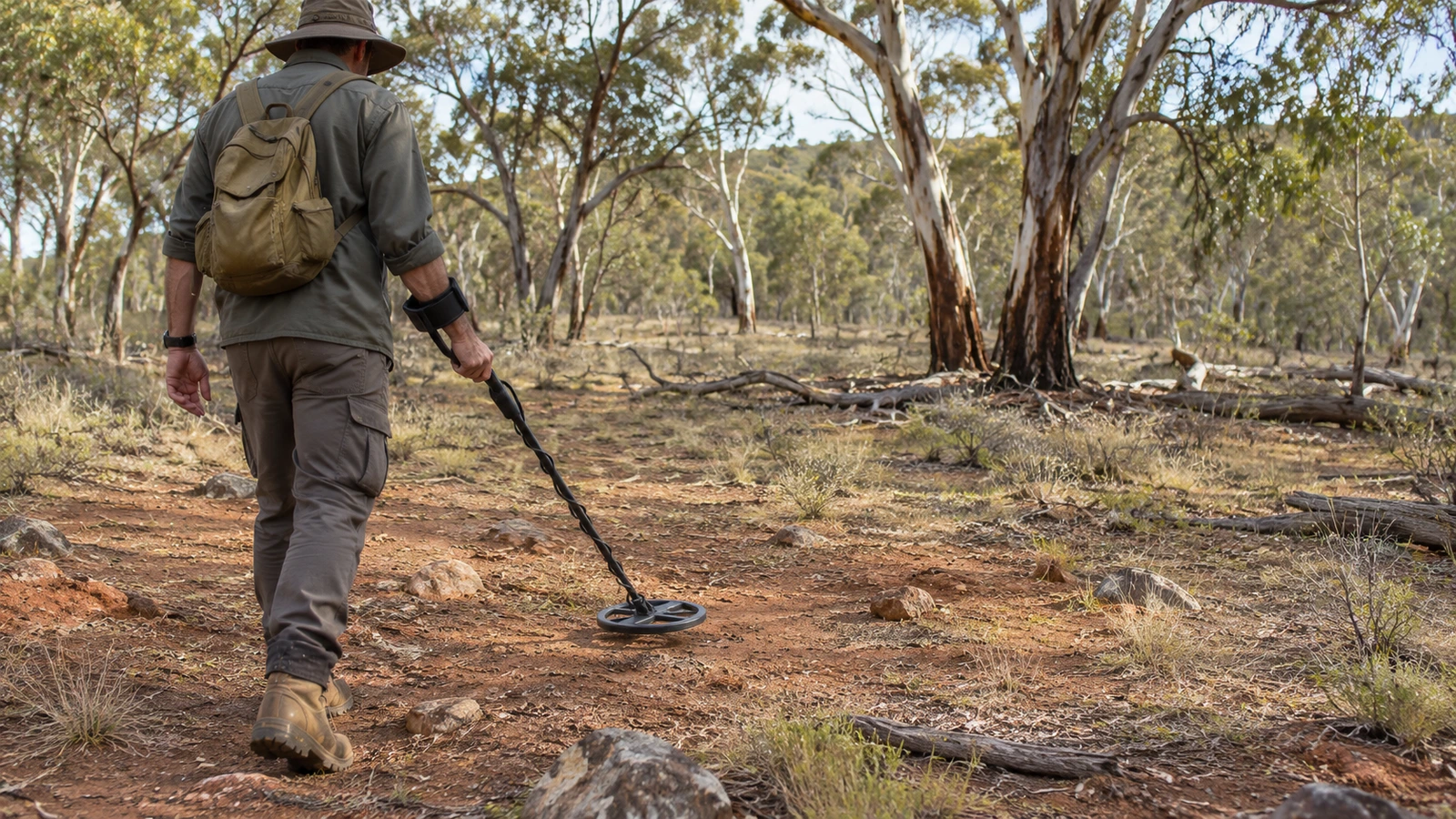
Test one change at a time
On a permitted practice patch, use a small recoverable test target or a known repeatable response. Compare your normal sweep with a slightly slower pass, keeping the coil height and settings steady. Then approach from another direction. These comparisons tell you more than changing speed, sensitivity and ground balance together.
Do not assume the slowest possible movement is always best. What matters is a clear response at a speed appropriate to that detector and mode. If the signal changes with sweep direction, check it carefully rather than deciding that direction alone proves gold or rubbish.
Overlap the search, then recheck the edges
The physical width of a coil is not a guarantee of equal sensitivity across its entire footprint. Overlapping passes help reduce missed strips. Turn and check the edges of a promising patch from another direction, especially around grass, branches and rocks that interrupted your first pass.
For the related equipment choices, read our coil-size guide and the explanation of ground balance and hot rocks. A steadier technique will not guarantee a nugget, but it makes the ground you have already walked over a better test of your detector.